Showing posts with label Faisalabad. Show all posts

Saturday, January 14, 2012

RIP: IT Genious Arfa Karim Lost the Battle for Life

The youngest Microsoft Certified Professional (MCP) Arfa Karim Randhawa passed away in Lahore today (Saturday, January 14). 

RIP: IT Genious Arfa Karim Lost the Battle for Life
The 16-year-old Arfa karim Randhawa was in coma since three weeks after suffering from epileptic attack. She was being treated at Combined Military Hospital (CMH) Lahore since December 22. 

According to hospital sources she was suffering from idiopathic epilepsy seizure which led to brain damage.

Arfa Karim became the youngest Microsoft professional after completing her MCP in 2004 at the age of only 9.

Continue reading below:

Thursday, June 16, 2011

Chand Grahan (Total Lunar Eclipse) in Faisalabad, Pakistan - - Exclusive Pictures of 'Red Moon'

MAD NEWS: Exclusive Picture Gallery (More Than 10 Photos) - ...: "Total Lunar Eclipse (Chand Grahan) on June 15-16, 2011 in Pakistan FAISALABAD, Pakistan (June 16) – People watched the spectacular scene..."


Thursday, April 8, 2010

Youngest Microsoft Certified Professional (MCP) at The Time of Certification - - Arfa Karim Randhawa: Set High Standards in IT Field ((Must See Video)

Arfa Karim Randhawa (born 1996), a girl from the city of Faisalabad in Pakistan, who in 2006 at the age of 9 years and 7 months, became one of the youngest Microsoft Certified Professionals (MCPs) in the world. She held that record for about four months until it was broken by the Babar Iqbal at the age of 9 years and 27 days. The same year, she was invited to visit the Microsoft headquarters in Washington and to meet with Bill Gates, CEO and Chief Software Architect of the corporation.

After being introduced to computers at the age of 6, Arfa prepared for her actual cerification examinations during her four month summer break from school. She holds an MPC in Windows Programming using the C# programming language.

After first discovering computers at the age of five Randhawa pestered her father for a PC. She has been accepted into Pakistan's Applied Technologies advanced computer institute.

Randhawa is now a Microsoft Certified Application Developer but plans to become a Microsoft Certified Solution Developer, which involves building programs into broader systems for business.


Arfa Karim also met Somasegar, the Vice president of Microsoft Inc. and to him, Arfa described about self-navigating car then after a careful intention to Arfa Karim's Ideas, Somasegar told Arfa Karim about existing applications for cars developed by Microsoft. She is so young to be an employee in Microsoft but Vice president of Microsoft told her about the possibility of an internship for her in next few years.


Being a Software programmer, Arfa Karim has developed many basic Windows applications using C# programming language such as calculator, sorting tools etc. Arfa Karim told them to study at Harvard University or MIT and then work for Microsoft.

Arfa Karim went in U.S.A. with her father Mr. Karim while her mother and two brothers (3 years and 7 years old) were at home.


Mir Khalil-ur-Rehman Foundation gave her Shabash Award for her achievement at this age. She also received Fatima Jinnah Gold Medal, Salaam Pakistan Youth Award and President's Award for Pride. Arfa Karim is Now a brand ambassador of PTCL EVO (Pakistan Telecommunication Company Limited).

UPDATES (January 14, 2012)

RIP: IT Genious Arfa Karim Lost the Battle for Life

إِنَّا لِلّهِ وَإِنَّـا إِلَيْهِ رَاجِعونَ   

She was an asset for Pakistan and pride for the nation. Big loss for her parents, family and the the whole Pakistanis.

Read More ... RIP: IT Genious Arfa Karim Lost the Battle for Life


Tuesday, March 16, 2010

Monkey Show in The Streets of Faisalabad - - Some Facts About Monkeys and Entertaining Video and Images

Monkey is an animal that is found in almost every country of the world, though its species differ from one region to the other. Monkeys can be classified into either of the two groups - New World Monkeys and Old World Monkeys, two of the three groupings of simian primates. The monkeys found in Africa, central to southern Asia, Japan and India are classified as Old World monkeys, while those found in Mexico and Central and South America can be grouped as New World monkeys. The differences between the two groups of monkeys manifest themselves in the form of varying physical traits. Read on further to get some interesting facts and amazing information on monkeys.

Facts about Monkey

Kingdom: Animalia
Phylum: Chordata
Class: Mammalia
Order: Primates
Suborder: Haplorrhini
Infraorder: Simiiformes
Families: Cebidae, Aotidae, Pitheciidae, Atelidae and Cercopithecidae
Species: Around 125
Length (including tail): 14 cm to 1 m (depending on the species)
Weight: 120 gm to 35 kg (depending on the species)
Smallest Species: Pygmy Marmoset (14-16 cm in length, 120-140 gm in weight)
Largest Species: Mandrill
Natural Habitat: Rain forest, islands, steppes, mountains savanna, tropical rain forest and scrubland (depending on species)
Diet: Fruit, grass, leaves, eggs, insects and spiders
Age: 45 (captivity)
Gestation Period: 4 to 8 months (depending on the species)
Number of Offspring: One

Interesting & Amazing Information on Monkeys
  • Monkeys never catch cold.
  • Yawning of a monkey means that either he is tired or he is mad at something.
  • Monkeys never eat a banana as it is; rather they peel it first and throw away the peel.
  • Howler monkeys are the loudest monkeys and their howl can be heard as far as 10 miles away.
  • Monkeys live in groups, known as troops, and travel together to find food.
  • The tip of a spider monkey's tail can support the weight of his entire body.
  • Monkeys live in trees, grasslands, mountains, forests and on high plains.
  • A monkey was once tried and convicted for smoking a cigarette in South Bend, Indiana.
  • Monkeys can breed at any time of the year.
  • Spider-monkeys have appeared in more films than any other breed of monkey.
  • Most of the monkeys are arboreal, while some are also terrestrial.
  • Monkeys use vocalizations, facial expressions and body movements to communicate.
  • Grinning or pulling the lip is a sign of aggression in monkeys, along with head bobbing and jerking the head and shoulders forward.
  • Monkeys express affection and make peace with others by grooming each other.
  • Some of the monkeys have prehensile tails, which can grab and hold objects.
Other than the fact mentioned about this naughty creature; monkeys are also an earning source of many people in sub-continent i.e Pakistan, India and other neighbouring countries. These people trained monkeys for little stunts and acting. Once the monkeys are ready they will take these monkeys for street shows. Mostly the children like such monkey shows and circus. After the show the monkey man will ask everybody in the crowd to give some money for that entertainment.


Few days back I got a chance to see such type of show in the streets of my city, Faisalabad. I captured that moments to share with my readers. I hope everybody on my blog will enjoy my posting and video below:


Saturday, March 6, 2010

Faisalabad: The Manchester of Aisa - - Bollywood Superstar "Kareena Kapoor" in Town For Marketing of Firdous Textile Products

Faisalabad district has made rapid strides in the field of industry after independence. It is now called the "Manchester of Asia" for its extensive development of textile industry. This development has been made possible by the continued efforts of pioneering entrepreneurs as well as workers over a period of four decades. Before independence, there were only five industrial units in Faisalabad City (then Layallpur).

Now, there are dozens of textile mills with other subsidiary units. Roughly, there are 512 large industrial units out of which 328 are Textile units, 92 engineering units and 92 of chemicals and food processing units. Other industries include hosiery, carpet and rugs, nawar and lace, printing and publishing and pharmaceutical products etc. There are also some 12000 house-hold industries, which include some 60000 power loom factories.

Faisalabad is an important hub which contributes to the trade and economy of Pakistan. During the past 10-15 years the textile industry of the country has suffered due to rising demands which were not backed up by necessary advancements in infrastructure and policies which were required to keep progress coming due to this reason we have seen stagnation especially in small and medium enterprises who were involved in the textile industry.

Yet there are various names which have managed to help a lot to the economy with their consistent efforts and hard work in the area. Among those successful names is Firdous textile Faisalabad which has maintained and multiplied their status as a quality nationwide producer of printed garments.

Recently their success was marked by Bollywood superstar Kareena Kapoor who was hired to style for the upcoming catalogue. This is the first time that she has been hired by Pakistani textile manufacturer.


Kareena Kapoor said ' I’m really impressed with the quality of designs which were presented to me’. This statement is a proof that the trend in style and fashion in Pakistan is satisfactory enough to compete with all international trends despite all the problems the country is facing.

Wednesday, January 6, 2010

University of Agriculture, Faisalabad (UAF) - - One of The Largest Agricultural Universities in Asia

The University of Agriculture, Faisalabad (UAF) is a university in the city of Faisalabad, Punjab, Pakistan. The first major institution of higher agricultural education was the Punjab Agricultural College and Research Institute which was founded in 1906 in the undivided Punjab, before partition in 1947.

At independence in 1947 Pakistan was a primarily agricultural country and in spite subsequent industrialization and development, agriculture remains central to its economy. After independence; the Government of Pakistan appointed National Commissions on Food and Education with the terms of reference to review, in all its outcomes, the prevailing agrarian system and to formulate measures for developing the full potential of our agricultural resources. The Commissions made a strong plea for establishing an Agricultural university which could play a more vigorous role in promoting research and education in Agriculture was established by upgrading the former Punjab Agricultural College and Research Institute in the year 1961-62.


The University's faculty comprises more than 500 teachers of whom 224 hold Ph.D. degrees mainly from foreign universities.

The University is organised into faculties of Agriculture, Agricultural Economics and Rural Sociology, Agricultural Engineering and Technology, Animal Husbandry, Veterinary Science, Sciences, and a Division of Education and Extension all located at the main campus in Faisalabad, and College of Veterinary Sciences at Lahore. These academic units offer a variety of study programmes leading to B.Sc. Agricultural Engineering, D.V.M., B.Sc. (Hons.), M.Phil, and Ph.D. degrees in various disciplines of agriculture and allied fields.

Faculties

Faculty of Agriculture

This faculty, the largest of all academic units, is responsible for conducting research on all aspects of crop production; teaching is undertaken at both under- and post-graduate levels by its various departments namely, Agronomy, Plant Breeding & Genetics, Plant Pathology, Agricultural Entomology, Horticulture, Soil Science, Forestry, Range Management, and Wildlife and Crop Physiology. The Faculty offers the undergraduate degree of B.Sc. (Hons.) Agriculture and post-graduate degrees of M.Sc. (Hons.) and Ph.D. in various agricultural disciplines.

Faculty of Agricultural Economics and Rural Sociology

The five constituent departments of the faculty are Agricultural Economics, Cooperation and Credit, Agricultural Marketing, Farm Management, and Rural Sociology. The Faculty offers courses in the subjects of Agricultural Economics and Rural Sociology at graduate and postgraduate levels.

The Faculty provides supporting courses for students enrolled in other Faculties. The Faculty also offers M.A. degrees in Economics and Sociology as evening college. A data-processing centre is attached to the Faculty. M.Sc. and Ph.D. degrees are offered in different disciplines.

Faculty of Agricultural Engineering and Technology

The Faculty includes departments of Structural and Environmental Engineering, Irrigation and Drainage, Food Technology, Farm Machinery, and Power and Fibre Technology.

The Faculty offers courses of studies, leading to the degrees of Bachelor of Science in Agricultural Engineering; M.Sc. in Food Technology, Fibre Technology, Agricultural Engineering; and Doctor of Philosophy in Food Technology and Agricultural Engineering.

In B.Sc. (Agricultural Engineering) the same fundamental courses are taught as in other engineering institutions with emphasis on agricultural problems including water management, farm machinery and food processing.

Faculty of Veterinary Science


The Faculty includes the department of Veterinary Anatomy, Veterinary Physiology and Pharmacology, Veterinary Pathology, Veterinary Parasitology, Veterinary Microbiology, Veterinary Clinical Medicine and Surgery, and Animal Reproduction. Candidates having a degree in biological sciences are considered for postgraduate admission in non-clinical subjects.
In this faculty, the students are enrolled for the degree of Doctor of Veterinary Medicine (D.V.M.) and for M.Sc(Hons.) and Ph.D. degrees in various disciplines.

Faculty of Animal Husbandry

The Faculty consists of four departments, viz. Animal Breeding and Genetics, Livestock Management, Animal Nutrition, and Poultry Husbandry.

This Faculty offers the degree of B.Sc. (Hons.) Animal Husbandry at the graduate level. It also offers supporting courses for students of D.V.M and B.Sc. (Hons.) Agriculture. It provides training the research facilities concerning livestock, poultry and their products to various departments in the University and provide advisory services to livestock and poultry farmers. Postgraduate courses leading to M.Sc. and Ph.D. degrees are offered by all the four departments in the faculty.

Faculty of Sciences


The Faculty includes the departments of Botany, Zoology, Chemistry, Physics, Mathematics and Statistics, Business Management Sciences, Computer Science, Social Sciences and Humanities, and Islamic Studies.

The Faculty offers undergraduate courses in physical, biological and social sciences and postgraduate degree programmes in Botany, Zoology and Fisheries, Chemistry, Bio-Chemistry, Physics, Statistics, Computer Science, Business Management and Commerce.

Graduates of pure sciences from other institutions are eligible for admission to courses leading to M.Sc., M.Phil. and Ph.D. degrees. Graduates having a relevant Bachelor's degree may also seek admission to MBA and M.Com. degree programmes.


Sunday, July 5, 2009

FAISALABAD -- AREA & POPULATION

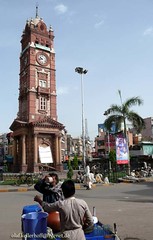
The Punjabi Faisalabad Clock Tower, built duri...Image via Wikipedia


Faisalabad district has an area of 5,856 km² and a population of approx. 35,47,446 souls. This district consists of six sub-division, the area and population of each sub-division is as under:

Faisalabad (City)
Faisalabad (Sadar)
Chak Jhumra
Jaranwala
Samundri
Tandlianwala


In 2005, Faisalabad has been upgraded to City District Government and the district has been divided into eight towns.

Lyallpur Town
Jinnah Town
Iqbal Town
Madina Town
Samundari Town
Jaranwala Town
Tandlianwala Town
Chak Jhumra Town
Muslim Town
Model Town
Lasani Town


Other towns in Fasialabad

Bolay Di Jhugii
Saeed Colony
Jinnah Colony
Peoples Colony
Raza abad
Green Town
Civil Lines
Officers Colony


FAISALBABD -- HISTORY IN BRIEF

King Faisal of Saudi ArabiaImage via Wikipedia

The city was founded by the British in 1892 by Sir Charles James Lyall for whom it was originally named Lyallpur. Prior to the British making the area into an urban center, it largely consisted of various villages. The city-center of Lyallpur (Faisalabad) was designed to model the British Flag, with a large clock tower in the center and eight bazaars around the clock tower. The construction of various canals allowed the area to be irrigated. After the founding of the city, people were invited to the city with promises of land if they were to work it. This allowed the city to grow rapidly.

In 1977 the name of the city was changed to Faisalabad in honor of King Faisal of Saudi Arabia who had been assassinated.


Thursday, July 2, 2009

WELCOME

Uhrenturm von FaisalabadImage by olaf.kellerhoff via Flickr

Welcome everybody to my world. This is CLOCK TOWER, the trade mark of our city Faisalabad. Faisalabad is called the Manchester of Pakistan. In the coming articles you will find everything about Faisalabad and further about Pakistan and it's all cities with their historical backgrounds and present significance.


Reblog this post [with Zemanta]
Related Posts Plugin for WordPress, Blogger...