Lahore, Pakistan (Mon, Mar. 26) – Moosa Feroz (Musa Feroz) is another young bright star who made all Pakistani nation proud in the world by winning a gold medal in an Online World Mathematics Competition held in Australia.
Moosa Feroz (Musa Feroz): Another young bright star who made us proud by winning gold medal in Online World Mathematics Competition held in Australia
The competition was held in first week of March and approximately 5 million young students took part from 100 countries around almost every part of the world. On Sunday (March 25), he was announced the winner of gold medal by the organizers of the competition.
The 15-year-old Moosa Feroz belongs to a Phalia - a small town in Mandi Bahauddin District - a backward area of the Punjab province.
Muhammad Shahbaz Sharif, the Chief Minister of Punjab, hailed the young student on his excellent accomplishment.
Muhammad Shahbaz Sharif said that the youngster has proved that the Pakistani youth is more talented than other children of the world. Punjab’s Chief Minister said further that the brilliance of such youth shows that the future of Pakistan is bright.
Amin Toofani: Winner of "HKS Got Talent" Show at Harvard University
Harvard University - Kennedy School Talent Show 2011 - Winning Act
Amin Tofani, a talented Pakistani won the first prize at John F. Kennedy School of Government talent show with his amazing Guitar skills that made the audience clapping and dancing.
That's really amazing and worth-watching! Wath the video and enjoy.
Mastana has died in Victoria Hospital, Bahawalpur after a long suffering with Hepatitis C on April 11, 2011.
One of the senior most theatre actors in Pakistan Murtaza Hassan, famous with his showbiz name as Mastana, was admitted to Victoria Hospital in Bahawalpur for three weeks ago.
According to latest news; Mastana lost his war against killing disease today morning in the hospital. His only son, Hafiz Saad Hassan, is studying in first year of his college.
His brother Javed Akhtar told media that his funeral prayer (Namaz-e-Janazah) will be offered today in the evening after Maghrib Prayer at graveyard of Noor Shah Bukhari, Bahawalpur.
May Allah (S.W.T) keep his soul in peace and serenity! Ameen.
All through his life Mastana spread smiles with his stage performances and spontaneous and hilarious dialogues. Mastana started his career in 1973. He performed in more than 2,000 television and stage dramas. Mastana who had been in the industry for 35 year made people laugh by his performance had now left them in grief. Mastana was widely regarded as the king of stage and theatre acting and his legacy will carry on for years.
Watch few glimpses of his performance in the video clip below:
The tenth death anniversary of Melody Queen, Noor Jehan (Noor Jahan), will be observed on December 23. Subcontinent’s legendary singer died on December 23, 2000, in Karachi after prolonged illness at the age of 74.
Noor Jehan (Noor Jahan), born as Allah Wasai on September 21, 1926, also known as Malika-e-Tarrannum (Queen of Melody) in Pakistan. She sung more than 30,000 songs in Pakistani and Indian films. “
(For detailed biography read the following article:
National TV channel PTV and almost all private TV channels and radio stations will pay tribute to the singing legend of subcontinent. Different organisations have also planned to observe the death anniversary of Madam Noor Jehan in different cities of Pakistan.
One of my favourite songs 'Jadon Holi Jaie Lena Mera Naa' ..... by Madam Noor Jehan (Noor Jahan)
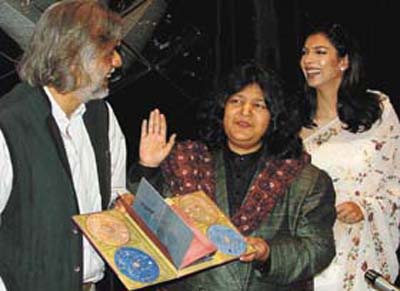
Abida Parveen: The Most Successful Female Sufi Performer
The Queen of Sufi Music Abida Perveen is a rarity in the world of Sufi music, a female lead performer. Abida Parveen is a singer of Sindhi descent and one of the foremost exponents of Sufi music (Sufiana kalaam).
Abida Parveen is the finest singer of ghazal, geet and sindhi, seraiki and punjabi kafees. “While khayal and thumri became a part of her childhood training, her effective rendering of folk and traditional music with great sophistication and without losing the basic characteristics of the regional music of sindh has made her a versatile singer.”
Abida Parveen sings in Urdu, Sindhi, Seraiki, Punjabi and Persian, and together with Nusrat Fateh Ali Khan is considered one of the finest Sufi vocalists of the modern era.
Abida Parveen is undeniably a spiritual daughter of great poet, Shah Abdul Latif Bhittai, the greatest sufi poet of Sindh.
Abida Parveen: Early Life and Music Education
Abida Parveen (Urdu: پروينعابده) was born in 1954 in mohalla Ali Goharabad in Larkana (Sindh province, Pakistan). Sindh, a land distinguished for its Islamic theology and quiet discourse on females.
Her father, whom she refers to as reverently as Baba Sain, was also a singer and had his own small music school where he taught only male pupils. He was devoted to the Sufi poets and that is from where Abida gets her devotional inspiration. For her the Sufi poets of Sindh and Punjab are the ones who speak of the inner truths of the self and in their poetry, where she finds solace and peace. As she was growing up, Abida attended her father’s music school and that was where her foundation in music was laid.
Master Ghulam Haider Khan, Parveen’s father, realized at early stages the penetrative powers of her voice. Abida Parveen, as a child, had early education from her father, later she was trained under Ustad Salem Ali Khan of Patiala Gharana. Much of the credit of her grooming goes to her late husband Shaikh Ghulam Husain who was a music director of Radio Pakistan, Hyderabad. She has vastly travelled abroad enthralling her audiences wherever she goes.
Abida Parveen: Early Days of Music Career
Abida Parveen - a name shines brightly in the music galaxy of the sub-continent. Though she is a versatile singer, Sufi music is her forte - a tradition of hundreds of years that seems to have seeped into her very being and soul. She also sings ghazals, Urdu love songs.
Hyderabad Radio first introduced her in 1977. She is today the most popular and well-known folk and ghazal singer of Pakistan who breathed a new life into ghazal and semi-classical music. She holds an audience of thousands spellbound. Her appearance is a complete reverse of many other stage performers. She begins each number as solemnly as the previous one as the evening progresses, sinking deeper and deeper into her kafi’s and Sufiana kalam of the mystic poets. She is a woman of very few words and asks to be judged only by her music. This folk phenomenon, called Abida Parveen, is deeply religious and profoundly humble.
Abida Parveen: A Versatile Singing Legend
Her command of kafi of sufi poets such as Hazrat Shah Abdul Latif Bhittai, Hazrat Lal Shabaz Qalandar, Hazrat Sacchal Sarmast from sindh, and Hazrat Baba Bulhe Shah, Hazrat Khawja Farid Ganje Shakar, Hazrat Sultan Bahu, Hazrat Mian Muhammad Buksh, Hazrat Ghulam Farid, Hazrat Pir Mehr Ali Shah and Hazrat Shah Hussain from pujab embellishes her versatility. Apart from sufis of Pakistan, Parveen also sings mystic poetry of the Asian Indian subcontinent, which include sufis such as Hazra Amir Khusrau, Hazrat Nizamudin Auliya, Hazrat Kutbuddin Bakhtiar Kaki, Hazrat Moinuddin Chishti and Hazrat Moulana Jalaluddin Roomi from Turkey.
Her contribution to singing Urdu Ghazals has been noteworthy. She has imported the feeling of a gushing stream to rendering of Urdu Ghazal. Eminent Urdu poet Kaifi Azmi has aptly remarked - "Abida Parveen has given new life to Ghazals - her rendition of spiritual Sufi songs has given new dimensions to the art of Kafi and Ghazal singing."
Professor G.M. Mekhri of Sind University has rightly said that, “Abida Parveen is the spiritual daughter of Great Sufi Saint Shah Abdul Latif Bhittai. She is the truly blessed voice.” Abida has recorded all the poetry of Hazrat Shah Abdul Latif Bhittai, an 18th century poet and composer who blended folk music and classical raga in a style known as kafi from his book called “Shah jo Risalo” according to their respective “Raags” which were also laid down by him.
Enjoy her most popular "Yar Di Gharoli Bhardi" below:
Abida Parveen: Awards and Recognition
Few days back, Abida Parveen said that she has been getting many offers from Bollywood for singing but this is not the right time to debut in Indian Film Industry.
She has been bestowed many awards notable among them are:
* Shah Abdul Latif Gold Medal
* Sind Graduate Association Gold Medal
* Sachal Sarmast Gold Medal
* Pakistan Television Award
* Qalander Lal Shahbaz Gold Medal
* President's Gold Medal Award for Pride of Performances.
Abida Parveen: Last Days at Doctor’s Hospital, Lahore
Abida Perveen was admitted at a local hospital after suffering chest pain yesterday (November 28, 2010).
Abida Perveen was admitted at a hospital in Lahore Sunday morning after she suffered a heart attack.
She underwent angioplasty and has been shifted to intensive care unit," the hospital doctors said.
The popular singer has now been out of danger and will be shifted to hospital room after 12 hours, they added.
But just now the TV channels are airing the news of the death of legendary Sufi Singer as on November 29, 2010 at the age of 56, inna Lillah-e-wa-inna Elaihai Rajaoon. May Allah bless her soul with peace and serenity! Ameen
Death News Verification Note from Author
After searching for the authenticity of the death news of Abida Parveen aired on a Pakistani TV channel; I couldn't find any verification of the news on internet, other TV Channels and online newspapers. Therefore, I feel sorry to post this news without proper verification. Let's hope and pray for the health of legendary Abida Parveen.
Just now I found a good news for the fans of Abida Parveen on Express News Channel. According to Dr. Haroon of Doctor's Hospital, Lahore; Abida Parveen is recovering from the heart attack and slowly getting stable. She will be hospitalized for 5-6 more days. May Allah bless her with sound health! Ameen.
Eid-ul-fitr has gone with all its festivities and happiness and now the second big event called Eid-ul-Azha (Eid al-Adha or Bakra Eid) is rapidly approaching which falls on the 10th of Zul-Hijjah. As every body knows, that moon of Zul-Hijjah has been sighted already today, so it is confirmed now that the Eid will be on 17th of November, 2010.
Apart from all the celebrations and festivities, the holy festival of Eid-ul-Azha (Eid al-Adha or Bakra Eid) for the year 2010 is coming with the soaring prices. The recent survey of the biggest cattle market in Karachi at Superhighway revealed that the prices of sacrificial animals have increased by 25 percent as compared to the prices of last year.
The increased prices are being linked to the different factors by the traders in the cattle markets; like animal affected by flood, increase in fodder price, transportation charges and other associated expenses. But the low interest of buyers can’t only be attributed to high prices of sacrificial animals; in fact, the mounting inflation the country has negatively affected the purchasing power of a common man in Pakistan.
A trader, Ahmed Aamir of Dilpasand Cattle Farm, declared that a bull of his farm was sold at Rs 1.85 million. "I have my own cattle farms in city and brought some 40 top class sacrificial calves from Sibbi, Sahiwal and Bahawalpur. I have sold 32 bulls and calves during the first week of this season and rest of the animals would be sold out in two or three days," he added.
Two beautiful videos of sacrificial bulls from Aamir Dilpasand Cattle Farm at Sohrab Goth, Karachi:
The celebrations are already touching peak high for upcoming big event for Muslims, Eid al-Adha (also called Eid-ul-Azha and Bakra Eid). I've collected few very cool videos and photographs of beautiful sacrificial animals from different cattle markets of different cities, that are worth-sharing with my readers. This is the first episode of many to come here on my blog, Welcome to My World.
Beautiful and Healthy Sacrificial Animals From Karachi Cattle Market
Beautiful Sacrificial Animals From Shah Cattle Farm:
Hoor …. Wow! Attractive All-White Bull: Catwalk on the Farm Carpet
The festivities and celebrations of Eid-ul-Azha 2010 (Eid Al-Adha) in Karachi begins with the setup of cattle markets (bakra mandi’s) . This year more tha two hundred VIP tents are planned to be mounted in the forthcoming Super Highway cattle market on the eve of Eid-ul-Azha (Eid Al-Adha) or Bakra Eid and an area of over 4000 square feet has been allocated for the cattle market.
Red Bull ……. Amazing Reddish-Brown Bull: Stunning Size and Beauty
It’s a really treat to see the beautiful sacrificial animals and big farm owners has step in the market already with some really healthy, highly decorated and elegant animals. Some of the famous farms, exhibiting their farm beauties, include Aamir Dilpasand Cattle Farm, Lasania Cattle Farm, Shah Cattle Farm etc. Even though the prices vary from animal to animal and ranges in millions; but still it is a part of eid celebration to see every animal available in the specially set up cattle market (Bakra mandi).
King of Asia …… Healthy White Bull with Brown Patches: The Real Jalwa and the Most Beautiful Among All Seen Before. See and enjoy … Amazing, isn’t it..??
Dabang No. 1 ……. Huge Black Bull: Looks Real Dabang Among All.
The Month of Zul-Hijjah is the last month of the Islamic calendar. It means ‘the month of Hajj’. This name of the month indicates that the great annual worship of ‘Hajj’ is performed in this month. For this reason, it has a peculiar significance as compared to the other months of the year.
The first ten days of Zul-Hijjah are extremely sacred and good deeds are most beloved to Allah in these ten days.
The Prophet said, “No good deeds done on other days are superior to those done on these (first ten days of Dhal Hajja).” Then some companions of the Prophet said, “Not even Jihad?” He replied, “Not even Jihad”, except that of a man who does it by putting himself and his property in danger (for Allah’s sake) and does not return with any of those things.”(Bukhari 15: 86)
For those not performing Hajj, it is Mustahabb (desirable) to fast on this day according to their own calendar. It sometimes occurs that the date of 9th Zul Hijjah falls on different days in different countries according to the sighting of the moon.
The fast of ‘Yaumal Arafah’ has been emphasized by the Holy Prophet (P.B.U.H) as a Mustahabb (desirable act). According to a Hadith, the fast of this day becomes a cause, Inshallah, of forgiveness for sins committed in one year.
When asked about the fast of 9th ZulHajjah (Yaum e Arafah) Rasool Allah saw said: “It expiates the sins of the preceding year and the coming year”(Muslim 6: 2603)
From the Fajr of the 9th of Zul Hijjah upto the Asr prayer of the 13th, it is obligatory on each Muslim to recite the Takbir-ut-Tashreeq in the following words:
Allahu Akbar, Allahu Akbar,
La Illaha Illallahu, Wallahu Akbar,
Allahu Akbar wa Lillahilhamd.
(Allah is the Greatest, Allah is the Greatest,
There is no God except Allah and Allah is the greatest,
Allah is the Greatest and to Him belongs all praise.)
Ibn ‘Umar and Abu Hurayrah, two of the Prophet's Companions, used to go out in the marketplace during the first ten days of Zul-Hijjah, reciting Takbeer, and the people would recite Takbeer individually when they heard them.
Generally, all good deeds are rewarded highly at this blessed time. These actions include praying, reading Quran, making Dua (supplication), giving in charity and being good to our families.
In addition, seeking Allah's forgiveness at this time is also encouraged. This means more than just a verbal expression of sorrow for past misdeeds. It also requires a firm resolution to avoid making the same mistakes in the future by giving up bad habits and behavior while sincerely turning to Allah.
Hajj - Pilgrimage to Makkah:
The fifth pillar of Islam is to make a pilgrimage (Hajj) to Makkah, in Saudi Arabia, at least once in one's lifetime. This pillar is obligatory for every Muslim, male or female, provided that he/she is physically and financially able to do so.
Prerequisites for performing the Hajj are to be a Muslim, to be free, to be an adult or mature enough, to be of sound mind, and to have the ability to afford the journey and maintain one's dependents back home for the duration. The reward for the Hajj is nothing less than Paradise.
The Hajj is the ultimate form of worship, as it involves the spirit of all the other rituals and demands of the believer great sacrifice. On this unique occasion, nearly two million Muslims from all over the globe meet one another in a given year. A total of 160,000 pilgrims from Pakistan will come for Hajj this year, 130,000 of them arriving on Pakistan International Airlines, Khurram Mushtaq, PIA General Manager, told Saudi Gazette.
The airline is bringing pilgrims from Islamabad, Peshawar, Quetta, Lahore and Sialkot, he said, adding that 24,000 pilgrims will travel on Saudi Arabian Airlines.
Regardless of the season, pilgrims wear special clothes (Ihram) - two, very simple, unsown white garments - which strips away all distinctions of wealth, status, class and culture; all stand together and equal before Allah (God).
The rites of Hajj, which go back to the time of Prophet Ibrahim who built the Ka'bah, are observed over five or six days, beginning on the eighth day of the last month of the year, named Zul-Hijjah (pilgrimage). These rites include circumambulating the Ka'bah (Tawaf), and going between the mountains of Safa and Marwah, as Haajra (Ibrahim's wife) did during her search for water for her son Isma'il. This act is called “Sa’ai”. Then the pilgrims stand together on the wide plain of Arafah and join in prayers for God's forgiveness, in what is often thought of as a preview of the Last Judgment. The pilgrims also cast stones at a stone pillar which represents Satan. The pilgrimage ends with a festival, called Eid Al-Adha, which is celebrated with prayers, the sacrifice of an animal, and the exchange of greetings and gifts in Muslim communities everywhere.
The salt at Khewra reaches the surface; it was discovered as early as the days of Alexanderthe Great. According to a legend there was a battle between Alexander the Great and Raja Poro in this area. After Alexander had won the battle, the soldiers were resting. They soon mentioned that the horses were licking the ground in a certain area. Here the salt reached the surface and the ground contained more salt than in general, which the horses found out.
Long ago the locals started to mine the salt on the surface, in small opencast mines. In 1872 Dr. Warth, a renowned British mining engineer, built the first tunnel at ground level to access the salt layers. He introduced room and pillar mining which is used until today. At the moment salt is mined in 19 different levels, producing about 325,000 tons per year.
Location:
Khewra Salt Mines is a salt mine in Pakistan, about 160 kilometers from Islamabad and 260 kilometers from Lahore. It attracts up to 40,000 visitors per year and is the second biggest salt mine in the world. Situated at the foothills of the Salt Range, Khewra Salt Mines are the oldest in the salt mining history of the sub-continent.
Karakoram Highway (KKH) – The Marvel of Civil Engineering:
A new all-weather road, the Karakoram Highway connecting Rawalpindi/Islamabad with China’s Xinjiang Province runs through the Northern Areas.
The Karakoram (the 'crumbling rock' in Turkish language) Highway is an incredible feat of engineering and an enduring monuments to the 810 Pakistanis and 82 Chinese who died forcing it through the world's most difficult and unstable terrain, making it possible to surface on earth the Eighth Wonder of the World. Karakoram Highway has a strategic importance that overarches the whole region. It forms the Asian 'high road' loop that binds Pakistan and China and can also serve as a link between China and the Central Asian states. In 2003, the Silver Jubilee celebrations (1978-2003) of the construction of the road were held both in Pakistan and China. Pakistan Post issued a Re. 2 special commemorative stamp on the occasion. However the road was officially opened on 27 August 1982.
The 1300 kilometres (800 miles) long KKH, or the N-5, originates from Hassan Abdal, a place some 45 kilometres from Islamabad on the Islamabad - Peshawar Highway, goes through Abbotabad, Manshera, crosses the River Indus at Thakot, on to Gilgit (through Besham, Pattan and Sazin) and then to Chilas, Hunza and Sost before crossing the Khunjerab Pass at the height of some 4800 metres (15,750ft) - the Zero Point between Pakistan and China. It then enters the high Central Asian plateau before winding down through the Pamirs to Kashgar, at the western edge of the Taklamakan Desert. It is a marvel of human endurance, ingenuity and determination. Both Pakistani and Chinese workers and engineers worked day and night over some of the most formidable and inaccessible mountain ranges of the world, with deep gorges and torrential Indus running along the track with its full might. The Indus River flows northwest, dividing the Himalaya from the Karakoram. The KKH runs along the Indus for 310 kilometres of its climb north, winding around the foot of Nanga Parbat, the ninth highest mountain in the world. Not far north of Jaglot the Gilgit river joins the Indus from the west. The highway then leaves the Indus for Gilgit, Hunza and Khunjrab rivers to take on the Karakoram Range - where 12 of the 30 highest mountains in the world overlook the KKH. At Khunjrab Pass, the KKH proudly stands as the highest metalled border crossing in the world. En route to Khunjrab, before Gilgit, there is a road sign inviting the attention of the tourists to stop and see the the Hindu Kush mountains converge with the Karakoram Range, a part of the Himalayan mountain system. While traveling along the KKH, many a tourists wonder as to how the Pakistanis and Chinese ever get this road through? Since the road has been carved through a tectonic collision zone and still generally kept open.
Karakoram Highway (KKH) – History:
China and Pakistan became long time strategic friends when President Ayub Khan of Pakistan visited China in 1964 and soon both great countries realized that a north - south link from China to the Arabian Sea can become a reality with the revival of the old “Silk Route”.
Silk Route - a fairy tale like travellers' dream route from Central Asia to the rest of the world; it existed as trade link between the East and the West around 100 BC and lasted until the 15th Century, when with the invention of ships, the trade became more cheaper and easier than the rugged mountains through which the Silk Route passed. Since mostly the traders from the West imported the Chinese silk, the route became to be known as the Silk Route. Besides trade, the route was also used by the explorers, invaders, missionaries and philosophers.. Buddhism, Islam and Christianity mainly came to this region through this trade linking route. The Zero Point of the route started from Xian in China through the great Gobi Desert to Dunhuang, where it bifurcated via Taklamakan Desert to Kashgar and through Yarkand to Kashgar. It is from Kashgar that it entered the subcontinent over the Pamirs and the Karakoram Mountains.
Keeping in view the importance of this route; in 1966, Pakistan and China agreed to construct the KKH - the Karakoram Highway. The KKH has opened up remote villages where little has changed in hundreds of years, where farmers irrigate tiny terraces to grow small patches of wheat, barely or maize that stand out like emeralds against the grey, stony mountains. One of the workers narrates an interesting anecdote about the remoteness of the area. When after lot of difficulties, a Pakistan Army jeep managed to reach a so far inaccessible village, a villager ran and brought a vase full of water and placed under the front of the jeep. When asked what he was doing, the villager innocently replied, "Sir, your animal must be thirsty."
Karakoram Highway (KKH) – Visit Plan:
Since the KKH passes through some of the most rugged mountain ranges, which become rather inaccessible during the snow falls and the rainy season, one should plan to travel on the KKH in the spring or early autumn. Heavy snow during harsh winters can shut the highway down for extended periods. Heavy monsoon rains, around July and August, cause occasional mudslides that can block the road for hours or more. The border crossing between China and Pakistan at Khunjrab Pass is open only between May 1 and October 15 of every year. These days, the trade between Pakistan and China thrives and Pakistani traders frequent the KKH very often to go to Kashgar and bring back cheap Chinese cloth, decoration pieces and electronics, which have flooded the Pakistani markets from Peshawar to Karachi.
The KKH is at its most spectacular between Ganesh and Gulmit. The road rides high on the eastern side of the river, twisting and turning round the barren foot of the Hispar Range, which boasts six peaks over 7,000 meters (23,000 feet). On the opposite bank, villages cling implausibly to the side of the 7,388 meter (24,240 foot) Ultar Mountain. Between the villages, grey screen slithers down to the river, looking in the distance like piles of find cigarette ash. Above, the jagged teeth along the ridge hide the highest snow-covered peaks from view. The KKH crosses back to the west bank at Shishkot Bridge, from which the view upstream of the serrated ridge of mountains above the river is one of the most photogenic prospects of the entire drive. From here to Tashkurgan in China the people speak Wakhi.
The sport of free style polo had its beginnings in Baltistan Northern Area of Pakistan. Baltistan's princely kingdoms adopted the sport and made it their own, with their natural proclivity for riding. Kingdoms kept special stables for polo ponies, and their teams included among the very best in the world. Very often, the players were the rulers and members of their families, though their armies also encouraged the sport. In fact, if the sport has a presence in the country today, it is because the former royal families have continued to provide encouragement for it.
Polo continues, as it has done for so long, to represent the pinnacle of sport, and reaffirms the special bond between horse and rider. The feelings of many of its players are epitomized by a famous verse inscribed on a stone tablet next to a polo ground in Gilgit, Pakistan: "Let others play at other things. The king of games is still the game of kings."
History of Polo:
Polo is possibly the oldest recorded team sport in known history, with the first matches being played in Persia over 2500 years ago. Initially thought to have been created by competing tribes of Central Asia, it was quickly taken up as a training method for the King’s elite cavalry. These matches could resemble a battle with up to 100 men to a side.
As mounted armies swept back and forth across this part of the world, conquering and re-conquering, polo was adopted as the most noble of pastimes by the Kings and Emperors, Shahs and Sultans, Khans and Caliphs of the ancient Persians, Arabs, Mughals, Mongols and Chinese. It was for this reason it became known across the lands as "the game of kings".
British officers themselves re-invented the game in 1862 after seeing a horsemanship exhibition in Manipur, India. The sport was introduced into England in 1869, and seven years later sportsman James Gordon Bennett imported it to the United States. After 1886, English and American teams occasionally met for the International Polo Challenge Cup. Polo was on several Olympic games schedules, but was last an Olympic sport in 1936.
Shandur Polo Festival:
At various tourist festivals in the North, polo has been introduced as a friendly, competitive sport. Perhaps the only place in the world where it is played, the game provides a great deal of amusement and mirth, but is not yet a serious pursuit.
In Pakistan Shandur invites visitors to experience a traditional polo tournament between the teams of Chitral and Gilgit. Along with Shandur, Chitral and Gilgit there are also formidable polo teams in Shigar Baltistan, Kharmang, Rondu, Khapulo, Skardu, Astor, and Nagar.
Held once a year during the months of July or August, it is one of the most outstanding festivals that are held on Pakistan's Northern areas - The Shandur Polo Festival. The polo ground placed in Shandur (Chitral) is the highest polo ground in the world at 3,700 meters and visitors spend a whole week watching exciting polo matches with traditional music.A whole new world is built at Shandur before the event. Visitors take the advantage of having a breath-taking view of Shandur with its beautiful lush green mountains and not to forget its pure water lake. The festival provides visitors with the thrilling excitement of polo in its true form. Its true form means no rules and regulations, plus the traditional music played throughout each match. Along with polo, you will find hundreds of local and foreign tourists. The archrival teams of Gilgit and Chitral fight for the trophy. As hundreds of spectators watch the two teams take on each other.
Gilgit, Chitral and Skardu have always played the game of polo closest to its original form. In the past, local Khans, Mirs and Mehtars were the patrons of the game. At times, more than 50% of the annual budget of their principalities would be spent on supporting the game.




 (also called Eid-ul-Azha and Bakra Eid). I've collected few very cool videos and photographs of beautiful sacrificial animals from different cattle markets of different cities, that are worth-sharing with my readers. This is the first episode of many to come here on my blog,


 reaches the surface; it was discovered as early as the days of Alexander the Great. According to a legend there was a battle between Alexander the Great and Raja Poro in this area. After Alexander had won the battle, the soldiers were resting. They soon mentioned that the horses were licking the ground in a certain area. Here the salt reached the surface and the ground contained more salt than in general, which the horses found out.
 is a salt mine in Pakistan, about 160 kilometers from Islamabad and 260 kilometers from Lahore. It attracts up to 40,000 visitors per year and is the second biggest salt mine in the world. Situated at the foothills of the Salt Range, Khewra Salt Mines are the oldest in the salt mining history of the sub-continent.
 connecting Rawalpindi/Islamabad with China’s Xinjiang Province runs through the Northern Areas.


 . Baltistan's princely kingdoms adopted the sport and made it their own, with their natural proclivity for riding. Kingdoms kept special stables for polo ponies, and their teams included among the very best in the world. Very often, the players were the rulers and members of their families, though their armies also encouraged the sport. In fact, if the sport has a presence in the country today, it is because the former royal families have continued to provide encouragement for it.


