Showing posts with label Eid. Show all posts

Sunday, November 6, 2011

Eid al-Adha will be celebrated tomorrow (Monday, Nov 07) -- EID MUBARAK to All: Watch video of the biggest cow of Asia

KARACHI, Pakistan (Nov. 06) – Eid al-Adha is an Islamic festival which is celebrated to commemorate the obedience of Prophet Ibrahim towards Allah (S.W.T).


Prophet Ibrahim who was a very aged man had only one son named Ismaeel who was born to him only in his old age. When Allah (S.W.T) commanded him to sacrifice his son, Prophet Ibrahim didn’t hesitate and was about to do so. Allah (S.W.T) accepted his sacrifice and exchanged a goat with his son Ismaeel.

Today Eid al-Adha was celebragted in Middle East, central and far-east Asia and Europe.

Muslims residing in UK and other European countries were also among those who made the day by sacrificing animals. In United States, public slaughter of animals is banned; therefore, people perform the religious duty at Slaughter House.

In addition, Eid is being observed in Philippine, Indonesia, Malaysia and other far-east Asian countries.

In subcontinent, Pakistan, India and Bangladesh, Eid al-Adha 2011 will be celebrated tomorrow (Monday, Nov. 07). People are ready to celebrate the big eve with scarifying their animals.

I found the video, shared below, while searching for some material on Eid al-Adha and want to share here with my readers and friends across the globe. Watch video and enjoy!

In the end ….. Wish Happy Eid to All Muslims. EID MUBARAK and …. Don’t forget each other in your supplications and do remember those who need your support the most.


Friday, October 28, 2011

Zul-Hijjah Moon Sighted in Pakistan -- Eid al-Adha (Eid-ul-Azha) 2011 will be on Monday (November 07)


FAISALABAD, Pakistan (Oct. 28) – According to news aired on private TV channels; the moon for Islamic month of Zul-Hijjah (also called as Dhul-Hijjah in Arabic accent) has been sighted today; therefore, Eid al-Adha (Eid-ul-Azha/Bakra Eid) will be celebrated on Monday, 7th November 2011.


Zul-hijjah Moon Sighted in Pakistan Today - Mufti Muneeb-ur-Rehman to Announce Officially

The Central Moon Sighting Committee led by Mufti Muneeb-ur-Rehman will announce it officially very shortly.

Eid al-Adha (Festival of Sacrifice) is the second of the two major Islamic festivals. The other is Eid al-Fitr which follows Ramadan, a lunar month of partial fasting. 

Read more on the link below:


Monday, August 29, 2011

Eid-ul-Fitr 2011 (Eid al-Fitr 1432 AH) - - Will it be on same day as in Saudi Arabia..??

Eid ul-Fitr is one of the most significant festivals among the Muslims. It marks the end of the month of Ramazan also known as Ramadan, the month of fasting. In Arabic language Eid means festivity. Eid ul-Fitr means Festival of Breaking the Fast. This festival falls on the first day of the month of Shawwal, which is the tenth month according to the Islamic Calendar. 


Eid Mubarak: Eid ul-Fitr Likely on Wednesday (August 31)


If not impossible then it is very rare that majority of the Muslims across the globe celebrating Eid ul-Fitr on the same day and this rarity is just about to happen this year.

Reportedly, astronomical data hints that there is a possibility for sighting the new moon of Shawwal, 1432 AH in Pakistan on the evening of August 30, stated Pakistan Meteorological Office. 

On the other hand; the Islamic Crescent Observation Project (ICOP) is expecting that Eid-ul-Fitr this year will be celebrated in most of the Muslim countries on August 31 (Wednesday), a UAE-based newspaper reported. Although ICOP excluded few Muslim countries from this assumption based on the starting of Ramadan in these countries on August 1, including some countries in the Middle East, north and central Asia and northern Africa; but even then most of the Muslims will be celebrating Eid ul-Fitr on the same day, Wednesday (August 31).  

The basis of this conclusion is mentioned as the relatively shorter period of sighting the moon in most of the Muslim countries on August 29. 

According to Pakistan Met office the weather will be clear in most parts of the country on Tuesday (August 30) evening with only partially cloudy southern parts; therefore, the moon can be sighted on Tuesday (August 30) resulting in Eid ul-Fitr falling on Wednesday (August 31).


Saturday, August 27, 2011

Chand Raat 2011: A Festival Night before Eid-ul-Fitr - Shopping, Bangles, Mehndi, Fun and Celebrations

For Muslims across the globe, Eid-ul-Fitr, or Meethi (Sweet) Eid as it is known in Pakistan and India, is one of the favourite celebrations of the Muslim calendar.


1st Shawwal: Muslims Mark the End of Holy Ramadan and Celebrate Eid-ul-Fitr
Eid-ul-Fitr, is a Muslim holiday that marks the end of the holy month of Ramadan, the Islamic month of fasting. Eid is an Arabic word meaning “festivity”, while Fitr means “charity” and so the holiday symbolises the breaking of the fasting period. It is celebrated starting on the first day of the Islamic month of Shawwal.


New Dresses, Matching Shoes, Mehndi (Henna), Bangles (Churiyan) All Are Part of Eid and Chand Raat Festivities


Festival before Eid-ul-Fitr – Chand Raat:

'Chand Raat' is considered to be the eve of Eid Moon or the night of the sighting of the new moon. The term Chand Raat refers to the evening on which first lunar crescent of the month of Shawwal is sighted. Chand Raat (pre-Eid night) is celebrated as a very special occasion by Muslims all over the world.


Chand Raat: A Festival Night Before Eid-ul-Fitr
Chand Raat (pre-Eid night) is a multicultural Islamic celebration/event. Chand Raat which means 'night of the moon ' in the Urdu language marks the end of Ramadan and the start of month of Shawwal and Eid-ul-Fitr falls on 1st of Shawwal (10th month of Islamic/lunar calendar).

Activities and Celebrations on Chand Raat:

Chand Raat activities and festivities start with the first sighting of the moon. Children, adults, young, old, ladies and gents all celebrate the Eid moon sighting with passion and zeal. 

Wish Each Other Chand Raat Mubarak
As children we used to wait for the sighting of the moon and the announcement after it was seen. What a frenzy when all the family members would be on the roofs of their houses to see the new crescent emerge once the last fast (or 'Roza' in Urdi and ‘Soam’ in Arabic) had been finished with dates, cold drink and 'pakoras' and samosas. Every body without any age limit, full of enthusiasm, wishes each other Chand mubarak or Eid ka Chand mubarak .

"Chand Raat" ... Markets and Bazaars:
 
On this special night, City streets, markets, shopping malls gives a look of a festival. They are decorated very brightly. Markets and shopping malls remain open till late night. 

Chand Raat: Bazaars and markets will remain open almost all the night

This is the eve on which gifts are exchanged among friends, family and loved ones. People wear their best dresses to celebrate and enjoy this eve. Parents try their best to get the best clothes and Eid gifts for their children so that they can enjoy the full excitement of Eid day.

"Chand Raat" ... And Bangles (Churiyan):


Chand Raat: Every female wants beautiful  bangles matching with dress and shoes
Woman always inclined towards jewellery on special occasions like Eid and hardly imagine about Eid celebration without jewellery and makeup. Colourful and Bright Churiyan (bangles) lit the whole market with its beauty and vibrant colours. 

Chand Raat: Ladies concentrate on matching jewellery and accessories
People from all age groups can be seen in the markets buying Bangles for themselves or their loved ones. The tradition of buying bangles for Eid on the “Chand Raat” (The night before Eid) is still a much practiced Eid ritual.

Chand Raat: A night with colors and brightness visible in eyes
The young girls would take to the markets on the night before Eid where they would buy colourful bangles and specially prepared ‘bangle sets’ to be worn on Eid Day. Bangles have been an integral part of a women’s life since her childhood in the subcontinent.

"Chand Raat" ... And Mehndi (Henna):

Chand Raat: Celebrations are incomplete without Mehndi (Henna)
Shiny bangles, jewellery, bright clothes with matching footwear are part and parcel of the Eid festivities but applying glittering henna on hands and feet bring real fun for the young girls on “Chand Raat”.

Chand Raat: Beautiful Mehndi designs are made on hands and feet
Now the henna tattoos are also available in markets and are easy to paste on hands and feet and can be removed easily. The young girls admire henna tattoos associated with celebrations of Eid specifically.

Thursday, November 18, 2010

Second Day Celebrations of Eid ul Azha - - Three Special Dishes, Everybody Would Love to Enjoy on Bakra Eid


Second Day Celebrations of Eid ul Azha:

Pakistanis celebrated the second day of Eid ul Azha with religious zeal and fervour today.

The process of slaughtering of animals began soon after Fajr prayers, shared animals were also slaughtered.

After the sacrifice, meat is distributed among the poor, neighbors and relatives. During the process of meat distribution, the old, young and children took great interest and enjoyed the practice.

Eid ul Azha is being celebrated with slaughtering animals and arranging parties for friends and relatives.

Three Special Dishes on The Feast of Eid ul Azha
  • Pepper Steak
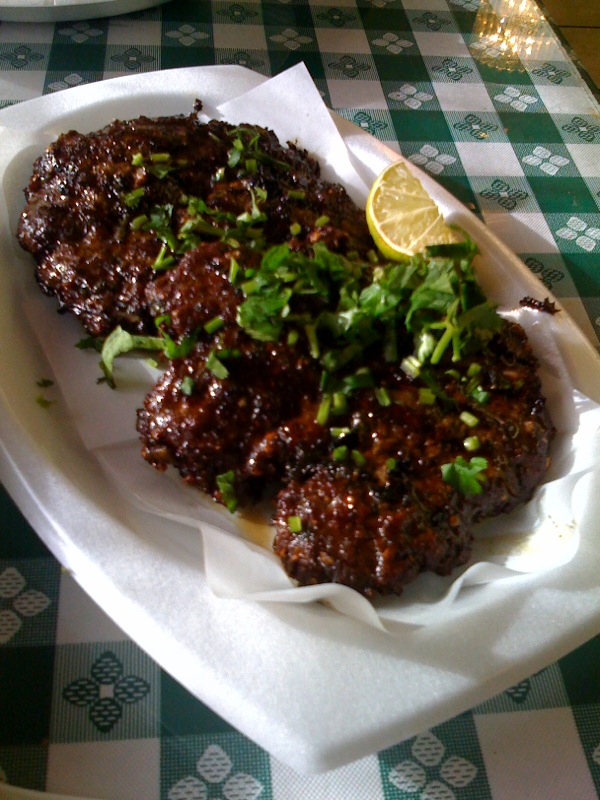
  • Chapli Kabab
  • Beef/Mutton Pulao
Personally, I love these three dishes and love to enjoy especially on Bakra Eid (Eid ul Azha). I hope my readers will also give a try to these dishes using the recipes below.

  • Pepper Steak:

Ingredients:

Beef 1/2 kilo (undercut)
Black pepper powder 1 table spoon
Mustard powder 1 tea spoon
Salt (to taste)
Ghee 2 table spoon
For the sauce
Vinegar 2 table spoon
Garlic 2 cloves (crushed)
Worcestershire sauce 1 table spoon
Salt (one pinch)
Margarine 1 table spoon 


Cooking Method:

1.      First spread the steaks on the cutting board and with a heavy knife pound it and spread it evenly then apply mustard pd, black pepper pd and salt over it and keep it aside.
2.      On 2 separate stoves keep 2 fry pans on it we can even alternate the frying pan with a big tawa.
3.      But the other pan should be smaller.
4.      On a high flame brown the steak for 1 minute on both sides each.
5.     In the other frying pan heat margarine, in that add garlic cloves, sauce, vinegar and salt and cook  it very nicely, when a strong steam oozes out of it then drizzle this over the steak.
6.     The steak should be served as soon as it is made.
7.     This is the way it tends to remain tasty.
  • Chapli Kabab:
Ingredients:

  • 1 kilogram of Beef (Keema) (finely minced)
  • 1 tea spoon Red Chilli Powder (Pisi Lal Mirch) (crushed)
  • ½ tea spoon Black Pepper (Pisi Kaali Mirch) (coarsely ground)
  • 1 tea spoon Coriander (Dhania) (coarsely ground and roasted)
  • 1 tea spoon Cumin Seeds (Sufaid Zeera) (roasted and finely ground)
  • 4 Green Chillies (Hari Mirch) (finely chopped)
  • 1 medium Onion (finely sliced)
  • 4 Tomatoes (finely chopped)
  • 1 bunch of Fresh Mint Leaves (Podina) (finely chopped)
  • 1 bunch of Fresh Coriander Leaves (Hara Dhania)
  • Salt (to taste)
  • 1 Egg
  • ½ cup Cooking Oil
 

Cooking Method:
  1. Mix all of the ingredients with minced beef and knead mixture well. Set aside for 15 to 20 minutes.
  2. Take about 1 ¼ table spoons of meat mixture in your hand. Place it in center of palm. Roll it to form a smooth ball. Flatten the ball by pressing firmly between your palms. These Kabas should be a little bigger in size than usual round Kababs.
  3. Heat oil in frying pan. When oil gets hot lower heat and fry Kababs until done normally, up to the taste.  
  • Mutton/Beef Pulao:
Ingredients:
  • Mutton/ Beef – 2 lb
  • Basmati Rice – 3 Cups
  • Onions(medium sized) – 2 chopped into pieces
  • Ghee(Clarified Butter) – 3 tablespoons
  • Tomatoes(medium) – 2 chopped into pieces of four
  • Green Chilies – 3 to 5
  • Garlic Paste – 1 tsp
  • Garlic – 1 big head
  • Cloves – 10
  • Black Pepper – 1 tsp
  • Cumin – 1tsp
  • Cashew Nuts - 12 to 15
  • Raisins - 10
  • Water – 4 and half cups of water
  • Oil – one third cup
  • Salt to taste
 

Cooking Method:
  1. Soak the rice in water for half an hour.
  2. Heat 1 tsp of ghee (clarified butter) in a pan and fry the cashew nuts and raisins. Keep aside.
  3. Take 4-1/2 cups of water in another big pan or pressure cooker. Add the mutton/beaf, the chopped onion (one), the chopped tomato(one), the cloves and the head of garlic.
  4. Cook for at least 30 minutes. If using beef then at least 45-50 minutes. The meat has to be tender (dig a fork into the meat and see if it goes through easily without breaking it, the indication being that it is cooked well). If using a pressure cooker keep cooking the lamb for 10-15 minutes after one steam in low heat and 20 for beef.
  5. All these above ingredients cooked with water will serve as the stock for the Pulao.
  6. In another big pan heat 2 tea spoons of ghee, the oil and then add the cumin seeds and the second onion finely chopped. Sauté till the onion takes on a yellowish/brownish hue and becomes a little pulpy.
  7. Add 1 tea spoon of garlic paste, the second tomato finely chopped and sauté them.
  8. Take out the meat and cook it with this pulp. Sprinkle the black pepper.
  9. Now bring the stock to a boiling point and then add the soaked basmati rice. Cook the whole thing in medium flame, stirring it with a spoon from time to time till it gets cooked and the water almost evaporates.(If the stock is not enough, add water as required when mixing with the rice).
  10. Once the water almost escapes add the cashew nuts and raisins and keep it aside covered with a lid for about 5 minutes more.
  11. Your Pulao is ready. Serve the delicious dish with Raita.

Wednesday, November 10, 2010

Eid ul Azha (Eid al-Adha) 2010 - - Recent Review of Prices of Sacrificial Animals in The Cattle Markets of Islamabad/Rawalpindi and Lahore


"It is not their meat nor their blood that reaches Allah; it is your piety that reaches Him." (Qur'an 22:37)

Eid ul Azha (Eid al-Adha) is coming and coming with a bang. Common man is already licking the wounds of soaring prices of petrol, utilities bills and kitchen items ranging from vegetables to sugar and spices. In the present scenario; it’s quite difficult for people to welcome the big event of Eid ul Azha (Eid al-Adha) with the religious zeal and fervour. People all around the country are complaining about the sky-high prices of sacrificial animals in the urban areas, as well as, in rural areas. 


There are two factors contributing towards the low interest of purchasing animals for sacrifice on Eid ul Azha (Eid al-Adha):

  • The increasing prices of animals, as every body knows, and
  • The decreasing purchasing power of a common man, as 90% of people are suffering due to high and ever increasing inflation in the economy.

These two factors are equally contributing to the lack of will to purchase a sacrificial animal for Eid ul Azha (Eid al-Adha).

Analysis of the prices, in the current cattle markets in the different cities of Pakistan, clearly depicts an increase of prices of animals from 40-50% as compared to the last year. Some buyers are complaining of even 60% hike in prices. Most of the buyers are going back from cattle markets without purchasing of animals due to the high and unaffordable prices. Many buyers are even reluctant to bargain with the traders because of too high prices demanded by traders.     

In the cattle market of Rawalpindi, the price of an average size goat starts from Rs. 18,000 and that of a cow or bull from Rs. 40,000. Twin cities of Rawalpindi and Islamabad are also facing shortage of animals. That factor is also encouraging traders to demand and charge their own prices in the absence of any price control mechanism. People are tending towards the rural areas in search of sacrificial animals which might be compatible with their budgets. One of them, Malik Safdar, a resident of Chaklala Scheme-III, bought two goats for Rs 28,000 from Taxila. He suggested that people should visit rural markets to avoid overcharging. He said he was planning to buy a cow but there was shortage of big animals.


The situation evenly prevails in the cattle markets in Lahore. Unaffordable prices of sacrificial animals are not only spoiling the business of animal trading but also disappointing the people of Lahore in order to follow their religious rights.

The traders are selling goats at Rs. 15000 to Rs. 25,000 while cows are available for the prices raging from Rs. 30,000 to Rs. 200,000 depending upon the weight and breed. This situation is forcing people of Lahore to follow the policy of wait and see until the prices will come down due to lack of business. While, the traders are of the view that rates of the sacrificial animals would further increase with each passing day due to the expenses for keeping them in the City till Eid ul Azha (Eid al-Adha).

After checking the different cattle market; people are also going to the option of collective sacrifices rather than an individual sacrifice. Facility of collective sacrifice is provided by Islam and it will help people to follow their religious rights in an affordable prices. We just have to remember the words of Holy Qur’an:

"It is not their meat nor their blood that reaches Allah; it is your piety that reaches Him." (Qur'an 22:37)

Sunday, November 7, 2010

Preview of Soaring Prices of Sacrificial Animals on Eid-ul-Azha (Eid al-Adha or Bakra Eid) 2010 - - Beautiful Pictures and Amazing Videos of Sacrificial Animals From Amir Dilpasand Cattle Farm


Eid-ul-fitr has gone with all its festivities and happiness and now the second big event called Eid-ul-Azha (Eid al-Adha or Bakra Eid) is rapidly approaching which falls on the 10th of Zul-Hijjah. As every body knows, that moon of Zul-Hijjah has been sighted already today, so it is confirmed now that the Eid will be on 17th of November, 2010. 


Apart from all the celebrations and festivities, the holy festival of Eid-ul-Azha (Eid al-Adha or Bakra Eid) for the year 2010 is coming with the soaring prices. The recent survey of the biggest cattle market in Karachi at Superhighway revealed that the prices of sacrificial animals have increased by 25 percent as compared to the prices of last year.


The increased prices are being linked to the different factors by the traders in the cattle markets; like animal affected by flood, increase in fodder price, transportation charges and other associated expenses. But the low interest of buyers can’t only be attributed to high prices of sacrificial animals; in fact, the mounting inflation the country has negatively affected the purchasing power of a common man in Pakistan.


A trader, Ahmed Aamir of Dilpasand Cattle Farm, declared that a bull of his farm was sold at Rs 1.85 million. "I have my own cattle farms in city and brought some 40 top class sacrificial calves from Sibbi, Sahiwal and Bahawalpur. I have sold 32 bulls and calves during the first week of this season and rest of the animals would be sold out in two or three days," he added.


Two beautiful videos of  sacrificial bulls from Aamir Dilpasand Cattle Farm at Sohrab Goth, Karachi:


Dilpasand Sibbi Bull ...


Eid-ul-Azha 2010 (Bakra Eid/Eid al-Adha): Beautiful and Healthy Sacrificial Animals (Videos) From Karachi Cattle Market


The celebrations are already touching peak high for upcoming big event for Muslims, Eid al-Adha (also called Eid-ul-Azha and Bakra Eid). I've collected few very cool videos and photographs of beautiful sacrificial animals from different cattle markets of different cities, that are worth-sharing with my readers. This is the first episode of many to come here on my blog, Welcome to My World.


Beautiful and Healthy Sacrificial Animals From Karachi Cattle Market


Beautiful Sacrificial Animals From Shah Cattle Farm:

Hoor …. Wow! Attractive All-White Bull: Catwalk on the Farm Carpet


The festivities and celebrations of Eid-ul-Azha 2010 (Eid Al-Adha) in Karachi begins with the setup of cattle markets (bakra mandi’s) . This year more tha two hundred VIP tents are planned to be mounted in the forthcoming Super Highway cattle market on the eve of Eid-ul-Azha (Eid Al-Adha) or Bakra Eid and an area of over 4000 square feet has been allocated for the cattle market.


Red Bull ……. Amazing Reddish-Brown Bull: Stunning Size and Beauty


It’s a really treat to see the beautiful sacrificial animals and big farm owners has step in the market already with some really healthy, highly decorated and elegant animals. Some of the famous farms, exhibiting their farm beauties, include Aamir Dilpasand Cattle Farm, Lasania Cattle Farm, Shah Cattle Farm etc. Even though the prices vary from animal to animal and ranges in millions; but still it is a part of eid celebration to see every animal available in the specially set up cattle market (Bakra mandi).


King of Asia …… Healthy White Bull with Brown Patches: The Real Jalwa and the Most Beautiful Among All Seen Before. See and enjoy … Amazing, isn’t it..??


Dabang No. 1 ……. Huge Black Bull: Looks Real Dabang Among All.


Sunday, September 12, 2010

Eid ul Fitr 2010: The Prize From Almighty Allah (S.W.T) For Fasting in Ramadan


Eid ul Fitr is linked with the Holy month of Ramadan. It signifies the end of the month of fasting (the first day of the month of Shawwal, 10th month of Islamic year). Sacrifice and kindness are the two things that are associated with Eid ul Fitr. The month of Ramadan is completely devoted to these kind deeds, in order to be answerable to God after death and this day is also celebrated to thank God for everything that he has given to the mankind.
Eid ul Fitr is a unique festival. It has no connection with any historical event nor is it related to the changes of seasons or cycles of agriculture. It is not a festival related in any way to worldly affairs. Its significance is purely spiritual. It is the day when the Muslims thank Allah (SWT) for having given them the will, the strength and the endurance to observe fast and obey His commandment during the holy month of Ramadan.
This day, in Muslim world, brings rejoicing and happiness. The rejoicing is not, however, at the departure of the month of Ramadan; it is the happiness which man feels after successfully completing an important task. It is celebrated for three days in a holiday called Eid ul Fitr (the Feast of Fast Breaking). Gifts are exchanged. Friends and family gather to pray in congregation.

After 30 days of fasting from August 12 to September 10, 2010, Ramadan has finally ended with a celebration called “Eid ul Fitr” or sometimes spelled as Eid ul Fitr. It is also called "Meethi Eid" (Sweet Festivity) becuase Muslims follow the Sunnah of Holy Prophet (P.B.U.H) of eating something Sweet before going for Eid Prayer. The word “Eid” is an Arabic word referring to as festivity while the word “Fitr” means break-fasting. As commanded by Quran, Muslims should complete their fasting on the last day of Ramadan and then recite the Takbir or “Allahu Akbar” all throughout the period of Eid.
Typically, during Eid al Fitr, Muslims try to follow the Sunnah of Holy Prophet (P.B.U.H). Here is what the Prophet (P.B.U.H) use to do on the day of Eid (Sunnah), May Allah’s peace and blessings be upon him:
  1. To rise early in the morning.
  2. Take a full bath.
    Clean the teeth.
    Wear the best cloths that he had.
    To use perfume (Gents Only).
  3. To eat something sweet like dates before leaving home.
  4. Go to the Eid prayer location very early. (The Prophet (P.B.U.H) use to offer Eid prayer in the central location that is not to offer it in a mosque of a locality without any legitimate excuse).
  5. The Prophet (P.B.U.H) used to go to the Eid Prayer location by one route and will return through another route.
  6. He (P.B.U.H) used to go for Eid on foot.
  7. He (P.B.U.H) used to chant slowly on the way to the Eid prayer location the following words: “Allahu Akbar, Allahu Akbar, Laa ilaaha illallahu Wallahu Akbar, Allahu Akbar, Wa lillahil Hamd.” (Translation: Allah is the greatest, He is the greatest. There is no god except Allah. He is the greatest. All praises and thanks are for Him)
  8. The Prophet (P.B.U.H) used to give Sadqa-e-Fitr (zakatul fitr) for before the Eid day. But if you have not done so please give now before the Eid. (Giving just before Eid is ok but against the spirit and the purpose of it.)

Thursday, September 9, 2010

"Chand Raat" 2010 - - Alwida Ramadan Kareem, Welcome to Eid


"Chand Raat" ... Festival Before Eid:
'Chand Raat' is considered to be the eve of Eid Moon or the night of the sighting of the new moon. The term Chand Raat refers to the evening on which first lunar crescent of the month of Shawwal is observed. It is celebrated as a very special occasion by Muslims all over the world. Chand Raat (pre-Eid night) is a multicultural Islamic celebration/event. Chand Raat which means 'night of the moon ' in the Urdu language marks the end of Ramadan and the start of Eid ul Fitr. Since the Islamic Calendar is lunar, Eid ul-Fitr is on the first of Shawwal - the tenth month of the Islamic year.
"Chand Raat" ... Markets and Bazaars:

On this special night, City streets, markets, shopping malls gives a look of a festival. They are decorated very brightly. Markets and shopping malls remain open till late night. This is the eve on which gifts are exchanged among friends, family and loved ones. People wear their best dresses to celebrate and enjoy this eve. Parents try their best to get the best clothes and Eid gifts for their children so that they can enjoy the full excitement of Eid day.

Young girls shopping on Chand Raat


Read the latest and more comprehensive article on Chand Raat 2011 and its festivities  


Related Posts Plugin for WordPress, Blogger...